
By Jemima Jefferson, LGB Business Forum
Another day, another article about Generation Snowflake and their inability to cope with the stresses and strains of the workplace. Last week, HR Magazine reported new research from Mental Health First Aid England (MHFA) which found a third of employees aged 18 to 24 have considered leaving their role because they do not feel psychologically safe.
“Aw, diddums,” you might retort. Life is hard, and the office isn’t a soft play area. Suck it up and get on with your work.
If that’s your initial reaction, consider who is a fan of psychological safety: Jeff Bezos. This uber-capitalist is hardly woke, and his company can’t be accused of being overly concerned with the wellbeing of its workers. Yet Bezos understands that “psychological safety” isn’t about coddling your staff: it’s about getting the best out of them.
Amazon has a meetings policy where the most junior people speak first – and Bezos last of all. This is designed to counteract the “HiPPO effect”, where everyone naturally defers to the Highest Paid Person’s Opinion.
That’s what psychological safety means in the workplace. Harvard Business School professor Amy Edmondson defines it as “a sense of confidence that the team will not embarrass, reject or punish someone for speaking up…a team climate characterized by interpersonal trust and mutual respect in which people are comfortable being themselves [our emphasis].”
That sounds like good business sense to me. So why is it so sorely lacking in England’s workplaces?
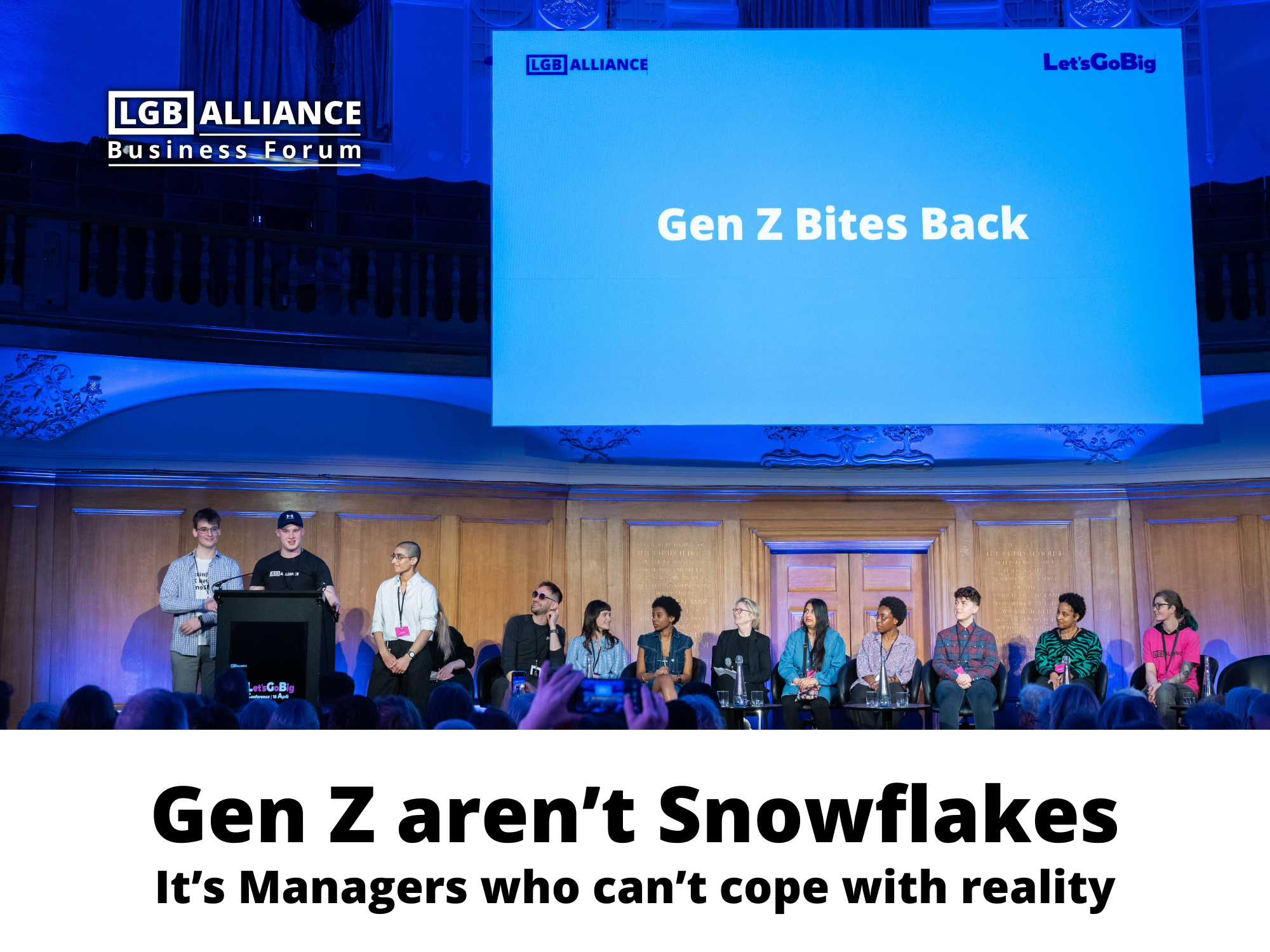
Why not ask younger and LGB employees? They are the primary victims of a corporate culture of bullying, ostracisation, or sanctioned for “being themselves” – along, sadly, with those who live with mental illness or developmental disorders. As one of the Gen Z panellists at LGB Alliance conference, Daniel Pennington, told me, young workers are worried about getting on the wrong side of HR, and navigating language that says one thing and means another.
“This can be especially difficult for autistic people to navigate alongside the rigours of normal workplace interactions,” says Daniel. “Many of my Gen Z peers feel constantly at risk of arbitrarily saying the ‘wrong thing’ with the in-crowd at work, and live in constant fear of HR’s passive-aggressive ‘softy-softy’ voice that conveys nothing but scorn.”
If that sounds familiar, it’s because it echoes the chilling effect faced by LGB employees which forces them to self-censor and affirm corporate-approved platitudes like the revoltingly homophobic concept of “male lesbians”.
And that poses a second question: who is responsible for this atmosphere of intolerance, recrimination, snitching and denunciation. I’m sad to say that MHFA itself provides a grim illustration.
This is an organisation I once passionately supported, founded by a group of fabulous people who were passionate about mental wellbeing. But I watched it become a snakepit where speech is policed, ideological “training” imposed, and pronouns forced on participants. When I posted something disobliging about gender identity, I found myself dragged through a disciplinary process where no one cared to understand why a lesbian might object to this ideology. The final straw was when I was given a final warning for merely liking a comment on LinkedIn. Of course, my request for a meeting to explain my viewpoint was rebuffed.
There’s obvious irony in an organisation championing psychological safety while denying it to their own staff and volunteers. And it cuts particularly cruelly for LGB people: how can we speak openly about being oppressed (and depressed) when our employers are telling us we’re “exclusionary” if we fail to celebrate male lesbians?
But I don’t want to scapegoat MHFA, here. They’re just another example of how concepts like kindness, caring, and psychological safety have been weaponised by workplace rule-setters to compel groupthink, silence “problematic” views, and ensure only HiPPOs get a hearing.
As Daniel points out, this is terrible for morale and productivity. “Workplaces will never get the best from Gen Z when dissenting opinion is not tolerated by managers who are convinced they are the sole guardians of morality, and that dissenters must be punished and scorned.”
So, the next time you see an article about Gen Z not being able to hack it in the workplace, remember: if you want to find the snowflakes in an organisation, your best bet is to look at the ones in charge.