
By Jemima Jefferson, LGB Business Forum
Employee burnout is reaching epidemic proportions, with the Health and Safety Executive (HSE) recording nearly a million workers as suffering from work-related stress, depression or anxiety — the highest rates on record. Many more are teetering on the edge, with research from Reed suggesting that an astonishing 85 per cent of workers have experienced symptoms of burnout. And one in six employees are struggling with stress, anxiety or depression at any one time.
Maintaining a happy and productive workforce is more than a mantra; it’s simple common sense. But supporting employees’ varied and complex mental health needs is a little more complex than providing free fruit in the staff kitchen. Last week’s Sunday Times carried an advertorial for a clinic specialising in workplace wellness; its website lists psychotherapy starting at £250 per person; adult psychiatry from £450.
That’s a big investment in boom times; in today’s belt-tightening era, it’s prohibitively expensive for all but a tiny minority of multinationals. And there’s another, more fundamental problem: outsourcing mental health to third parties doesn’t help staff feel valued and appreciated. Most businesses — or at least the ones who care about wellbeing at all — take a do-it-yourself approach by training Mental Health First Aiders (MHFAs) among their existing employees.
MHFAs can fulfil a vital frontline service, saving careers and even lives by identifying at-risk workers and intervening before stress turns into full-blown burnout or worse. As I have been a Mental Health First Aid Instructor for 10 years, I understand this well.
I’ve loved every minute of this work, so it’s heart-breaking to see it being sucked into the world of gender ideology. It started several years ago, when Associate Instructors with Mental Health First Aid England were asked to add pronouns to their name tags at a networking and training day. “Why?” came the anguished voice from across the room – and that started an hour-long debate that was never resolved.
Gender identity is a particularly corrosive influence in business because it’s an ideology that brooks no contradiction. That’s why we see its proponents promote the nonsense that speech is violence and disagreement is hate, while pushing for unlawful workplace speech codes that punish dissent. And I’m walking away from delivering the training I love because they are now adding ‘share your pronouns’ to the training slides.
When Mental Health First Aid instructors are drawn into gender ideology in such an insidious way, it can do appalling damage to employee wellbeing by discriminating against those who consider sex to be a material and immutable fact. This includes LGB workers, for whom it’s absolutely central to their homo- or bisexual identity, and who feel that the very concept of the “male lesbian” is insulting and belittling.
These employees are forced to inhabit a poisonous atmosphere where their experience and their rights are deemed transphobic. No wonder so many LGB employees feel compelled to agree in public with ideas they privately find offensive and absurd. So much for “Bring your whole self to work”. It should read “bring your whole self to work – unless you believe there are only two sexes and men can’t become women”.
A happy workplace isn’t one where people are set in opposition to each other; where one group is given “most favoured” status while another is deemed collateral damage. So what’s going wrong?
In my view, it’s fear combined with a failure of due diligence. First, mental illness is scary. (Just look at how we perpetuate the stigma by using euphemisms like “mental health” when we mean illness.) Meanwhile, the urge to be seen to “do something” explains the rush to employ third-party providers, including those that promote divisive ideologies and unlawful policies.
We’ve been here before. During the Rainbow Mania of the last ten years or so, organisations paid handsomely for “training” and accreditation from LGBTQ+ lobby groups as a substitute for addressing the real needs of gay and lesbian employees. (I’m a lesbian, by the way.)
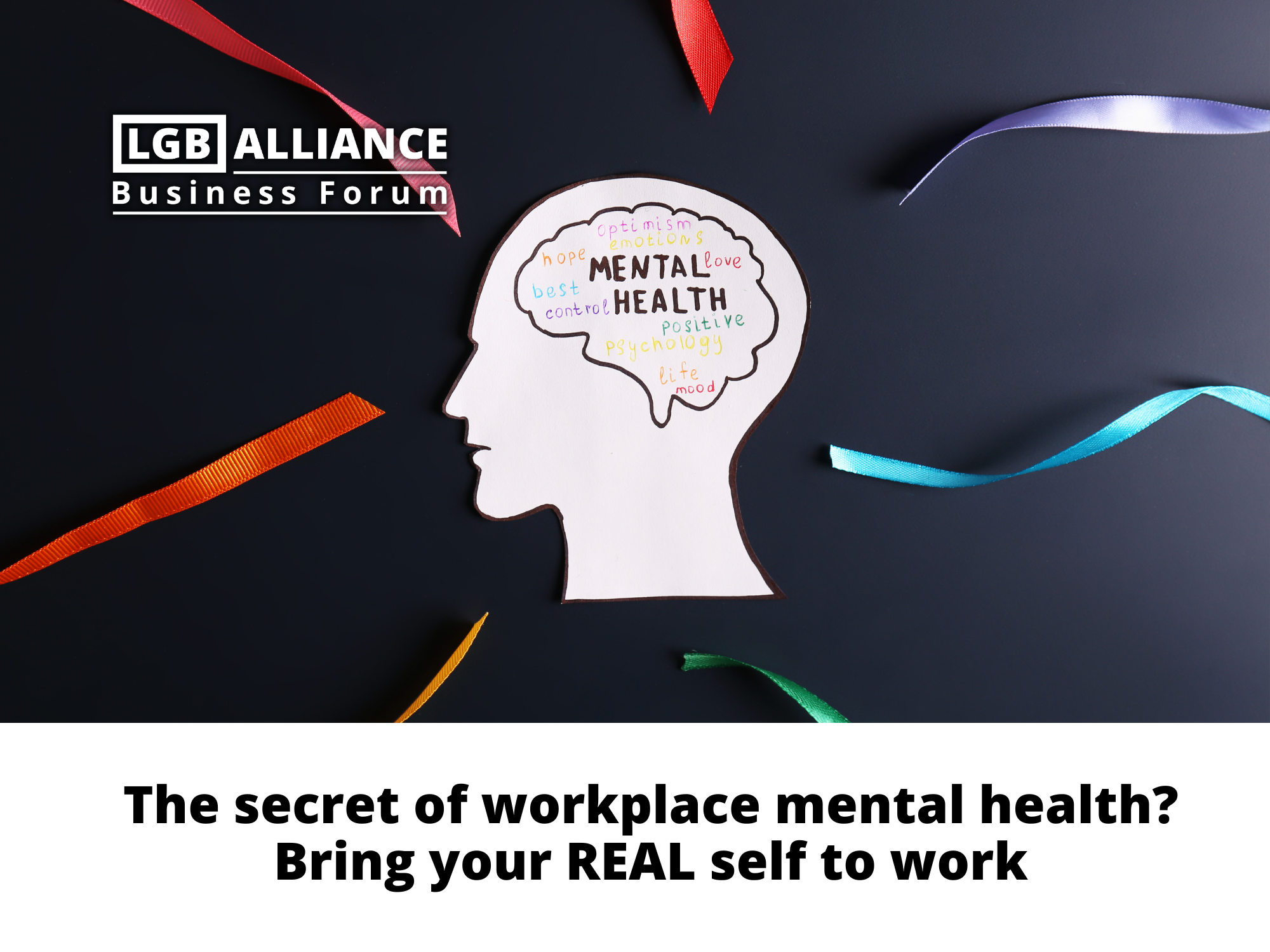
Like equality and diversity, there is no shortcut to employee wellbeing. It can’t be fixed by palatable platitudes, duvet days, yoga or kitten videos: it takes an holistic approach. Given we spend most of our waking day at work, employers play a crucial role in addressing and preventing burnout and stress – both of which can lead to mental illness. Their first responsibility must be to foster a culture of true equality, where no one fears getting sidelined or disciplined simply for being who they are. Without that solid foundation, the whole concept of “mental health first aid” crumbles to dust. Perhaps we need a new mantra – “Bring your real self to work.”